Where Are They Now: The Extra Effort Four


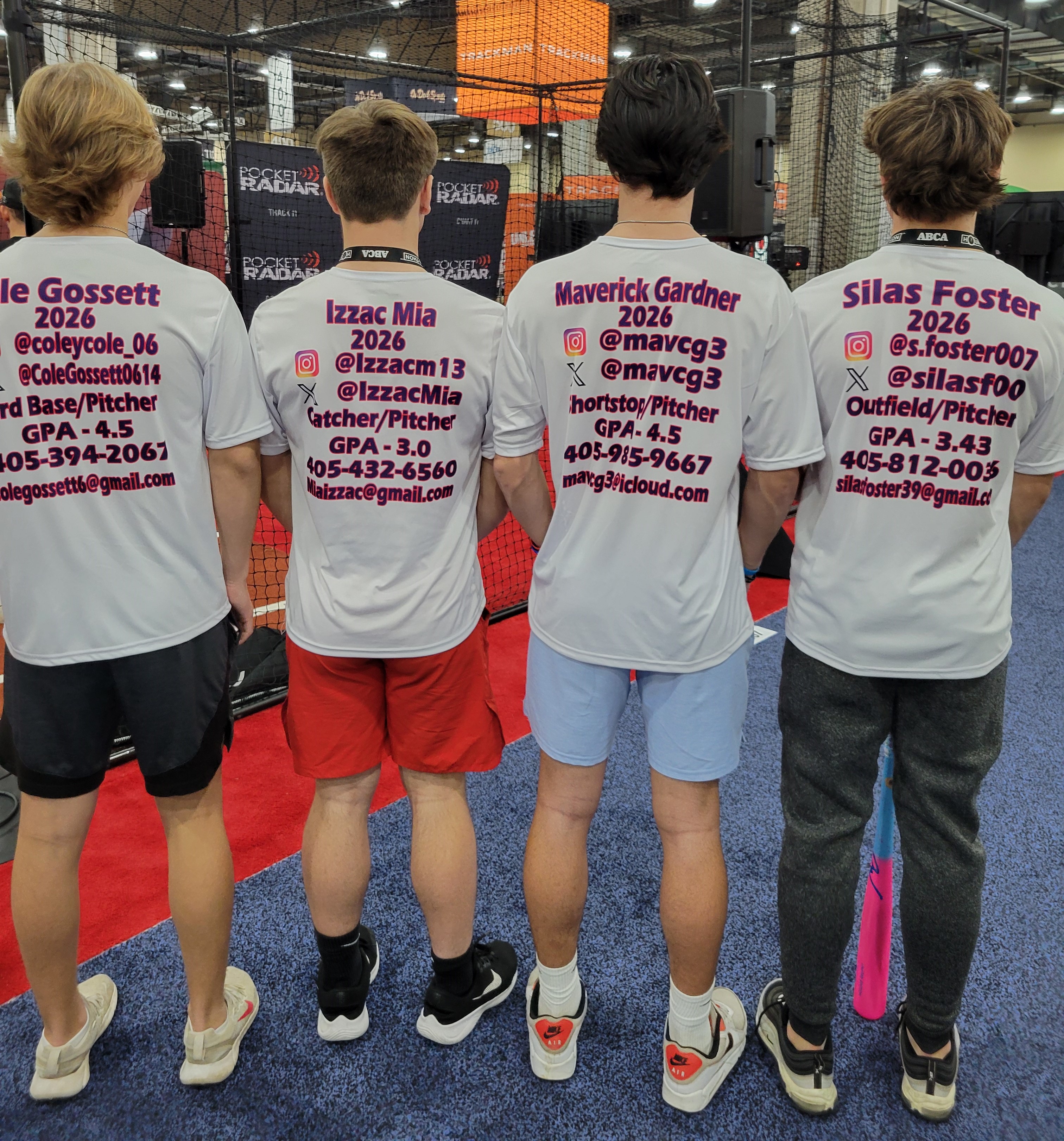
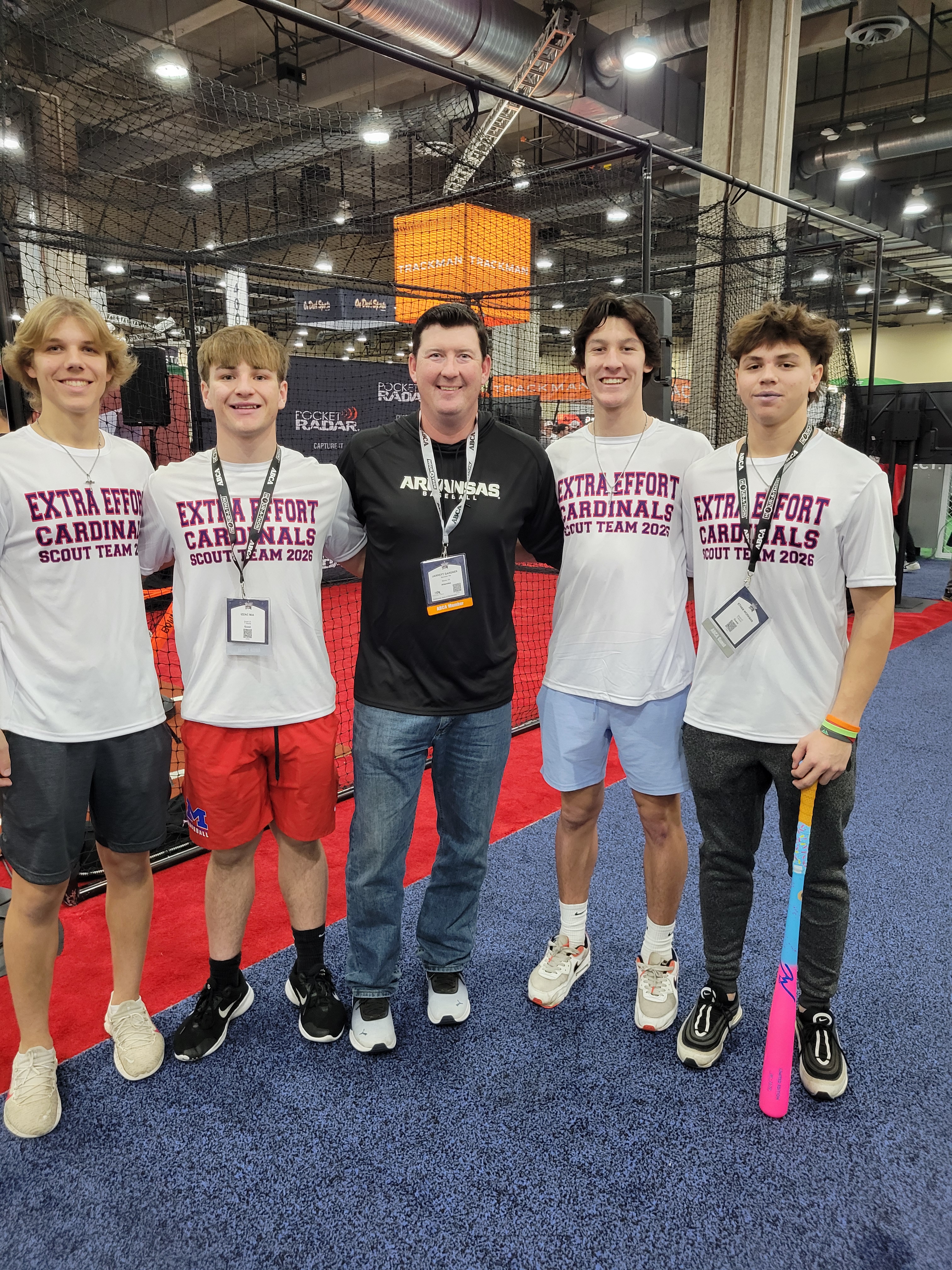
Back in January 2024, I spotted four young men working the ABCA exhibit floor in almost-matching t-shirts, cages to cages, booth to booth. Sophomores. Class of 2026. Jarrett Gardner’s Extra Effort Cardinals out of Oklahoma City, wearing their contact info on their backs like they meant business.
They did.

Graduation is close. I reached out to Jarrett to see where they landed.

Here’s the update.


Cole Gossett — 25 IP, 3-1, 35 strikeouts, 1.96 ERA. Committed to Seminole Junior College. Touching 90s with D1 and pro scout attention. One of the top pitchers in Oklahoma this spring.

Cole’s takeaway from ABCA, in his words: “The ABCA was like the fair but for baseball. Each booth had something new and exciting. Many booths had either samples you could try or keep, or a testing station to try out their product. Lots of fun experimenting.”
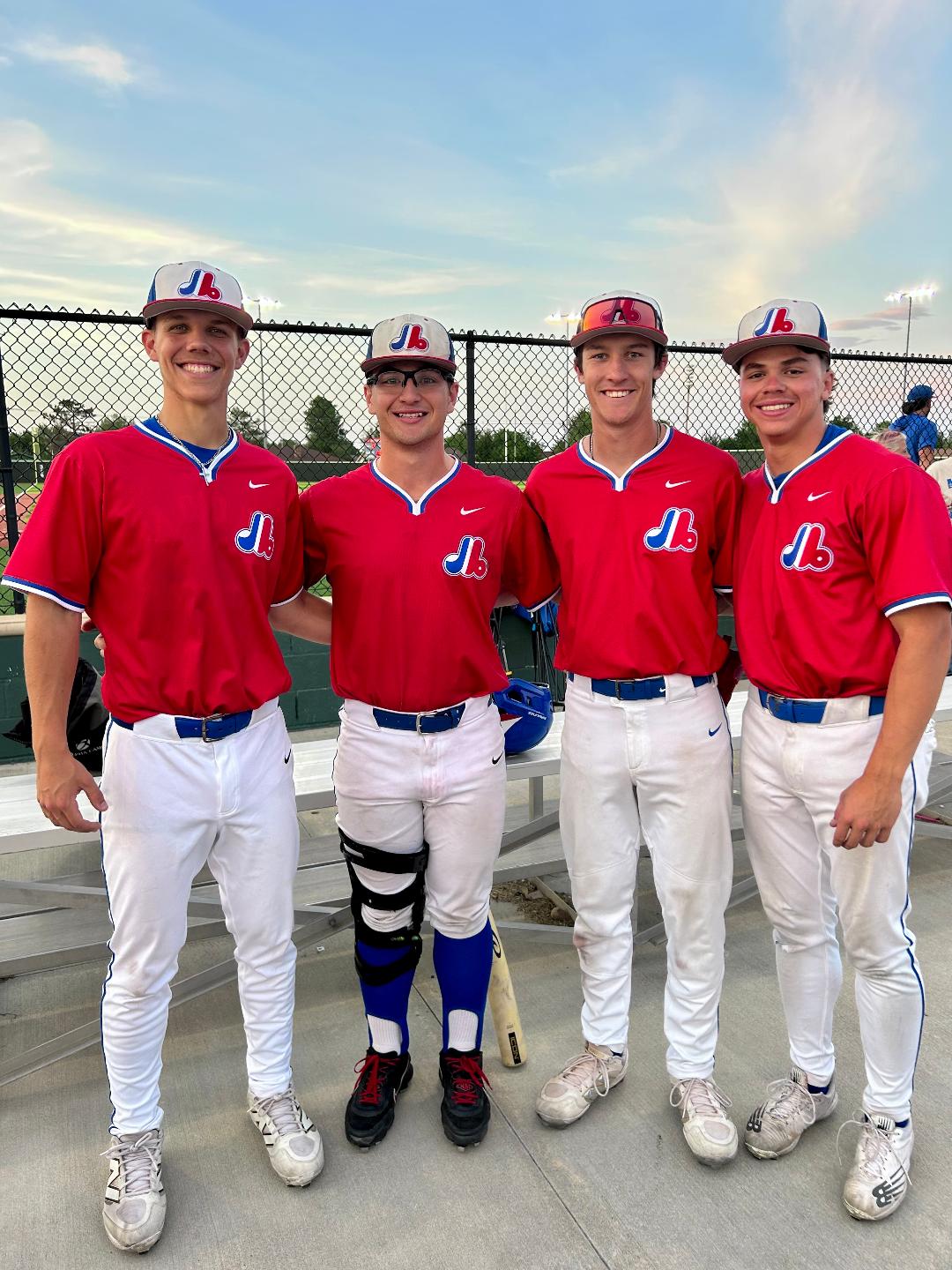

Izzac Mia — Senior year: .071, one double, 3 RBI. Committed to Coffeyville CC as a catcher.

That batting line doesn’t define a kid who showed up to the biggest coaching convention in the country as a sophomore and absorbed everything in the room. His ABCA memory: “I loved it. One of the coolest baseball events I’ve ever been to. My favorite part was walking around and getting to meet all the small owners and coaches and athletes.”


Maverick Gardner — .437, 4 doubles, 2 triples, 6 home runs, 22 RBI. Also 5-0 on the mound with 36 strikeouts and a 1.87 ERA. Oklahoma Defensive Player of the Year as a junior. Committed to Johnson County CC — currently the top JUCO program in the country — to play shortstop. One of the top SS in the 2026 class with D1 offers and pro scouts watching.

Jarrett’s son. He’s been to ABCA since he was seven. This trip landed differently.

“I realized that there is so much to know about this game. You can learn something new from everyone. I took that with me after leaving.”


Silas Foster — .260, 4 doubles, 2 home runs, 9 RBI. Recovering from a junior year injury and bouncing back well. Currently uncommitted as a center fielder with multiple offers.

“I enjoyed meeting all the new people. I liked listening to the advice of everyone who has been around the game for a long time.”


Jarrett’s original idea was simple: take four high school sophomores to the largest gathering of baseball coaches in the country and let them soak it in. He’s been doing the ABCA trade show circuit himself for years with the Backspin Tee, and he wanted these kids to experience what the baseball community looks like outside their comfort zone.

It worked. Four different players, four different paths forward, all of them leaving with something that didn’t fit in a cage bag.

Good luck, gentlemen. The game’s watching.

Charting Consistency in Pitch Movement

As I dive deeper into data, the one thing I become more convinced of is that consistency is the most important thing for a pitcher. If you can get your delivery to be consistent, you’re going to be able to reliable put the ball where you want to. The most important thing in pitching is throwing strikes, and consistency makes that easier.

So, Sean and I had a bullpen with one of our guys this week. I got PitchLogic data on his pitches and I pushed it into the Python visualization code I’ve been working on. Among the charts it creates is one for movement by pitch type. On that chart, it creates a box that’s where about half the pitches would be if he threw with this consistency. So, for some players and some pitch types, it can be very large and for others, very small.

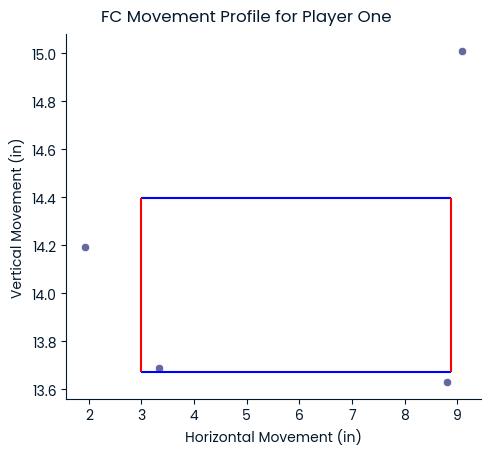
For these four-seam fastballs, that box is about 4 square inches. You can see most of his pitches are near it and a third of them are in it.

If Player One can get all of his four-seam fastballs to move 15 to 17.5 inches vertically and around 8 to 9 inches horizontally, he’s going to be consistently hitting his aim point.

Our goal isn’t for all of our pitches to put their pitches in his box, but, rather, that he consistently throws his four-seams this way. If he does, he can change his aim point and dominate hitters.

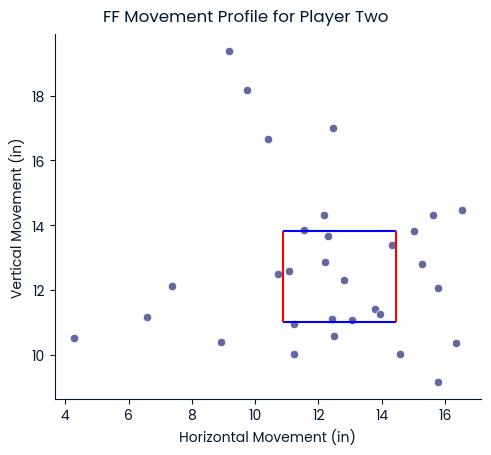
Every player is going to have a different box. Here’s a younger player whose box is about 10 square inches. As he gets more consistent, there will be fewer outliers and his box will get smaller (and he’ll throw more strikes).

I’ve only recently come up with this box – so recent that I don’t even have a name for it. It’s from the inter-quartile range of the movement data, so I could call it the IQR box, but that would get everyone asking why it’s called that instead of what it means and how it’s used. Maybe I could call it the MCB – Movement Consistency Box?

The PitchLogic ball auto-tags the pitches by type. I love this because it points out when players are not doing what they intend (throwing a cutter when they want to throw a fastball) or when they are mislabeling their pitches (throwing a cutter but calling it a fastball). The unintended variety tend to be younger players, while the mislabeling tends to come from high school players.

For our bullpen the other night, four pitches go auto-tagged as cutters. All four would have been down and to the left of the MCB for his four-seam fastballs. So, these wouldn’t have gone where he thought they would go. He also lost velocity on each of them. So, that high, hard inside pitch ends up slightly slower and out over the plate. Yikes!

Is it due to incorrect grip? Or a bad release? Is it lack of pronation? I honestly don’t know, but I know it’s something we’ll investigate and work on. I also need to check location on these pitches – time to get back to the code!


I’m not including any of the visualization posts in the Coaching Courses because they don’t really fit. They’re a bit esoteric and not really what you need to start coaching. It’s fascinating stuff, though.